





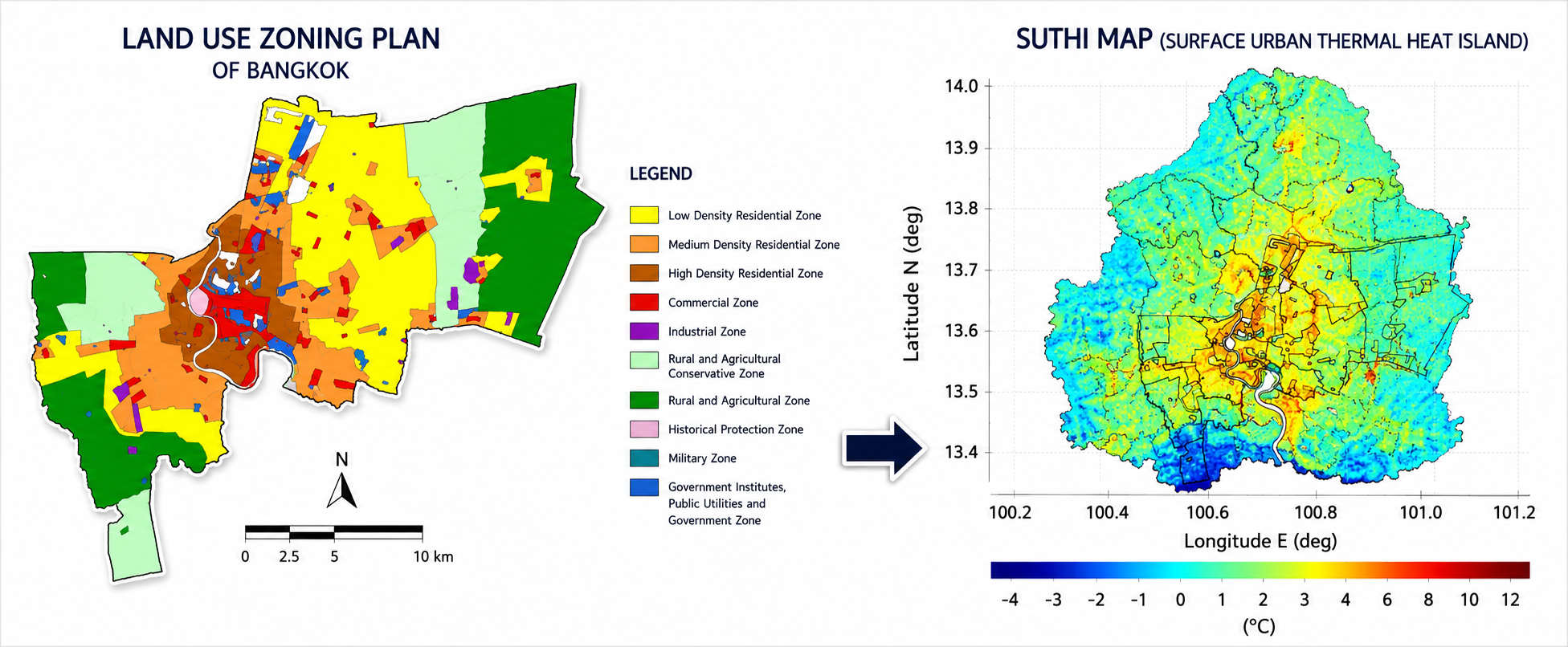
Land Zoning in Thailand: Color Codes, Building Rules and Buyer Checks
Understanding land zoning in Thailand is essential before buying land, renting a warehouse, developing a factory, building a house, or investing in commercial property. Zoning controls what land can be used for, what type of building may be allowed, how dense a project can be, and what permits are needed before construction starts.
Thailand uses color-coded zoning maps in many cities and provinces. These colors help identify whether land is intended for residential, commercial, industrial, agricultural, conservation, institutional, or mixed-use purposes. However, the color alone is not enough. Each area may also have sub-zones, building height limits, floor area restrictions, road-width requirements, environmental rules, and local conditions.
Before buying or developing land in Thailand, always check the official city plan, the specific land-use category, the title deed, road access, building-control rules, and permits required by the local authority.
What Is Land Zoning in Thailand?
Land zoning is the system used by planning authorities to guide how land can be used. It helps separate incompatible uses, such as heavy industry next to quiet residential areas, while supporting orderly urban growth, infrastructure planning, environmental protection, and public safety.
In Thailand, zoning is normally shown on official land-use maps. These maps are issued under town planning regulations and may be different in Bangkok, Pattaya, Phuket, Chiang Mai, industrial provinces, and other local areas. This means buyers should not rely on general color meanings alone; they should verify the exact zoning rules for the specific plot.
Why Zoning Matters for Buyers, Developers and Businesses
Zoning affects the value and usability of land. A plot that looks suitable on a map may not be legally suitable for a condominium, warehouse, hotel, factory, restaurant, school, or housing estate. For developers and investors, zoning can determine whether a project is possible at all.
For example, land in a residential zone may restrict industrial activity, while land in an agricultural or conservation zone may limit building size and commercial use. Industrial land may be suitable for factories or warehouses, but it may still have limits on pollution, building type, access, and environmental controls.
Common Land Zoning Colors in Thailand
The exact rules vary by province and city plan, but the following color categories are commonly used in Thai zoning maps.
Yellow Zone: Low-Density Residential
Yellow zones are usually intended for low-density housing. They may allow detached houses, small residential buildings, and low-rise development. Large buildings, high-density apartments, hotels, factories, and heavy commercial activity may be restricted.
Orange Zone: Medium-Density Residential
Orange zones generally support medium-density residential development. Depending on the local plan, townhouses, apartments, small condominiums, and community facilities may be possible. Building size and height still depend on local rules and road access.
Brown Zone: High-Density Residential
Brown zones are usually higher-density residential areas, often closer to central urban districts or mass transit corridors. Condominiums, apartments, and larger residential buildings may be more likely here, but project approval still depends on road width, building control laws, parking, environmental rules, and other regulations.
Red Zone: Commercial
Red zones are commercial areas intended for business, trade, services, offices, retail, hotels, entertainment, and mixed urban activity. These zones often allow more intensive development than residential zones, but building height, floor area, parking, fire safety, and environmental rules still apply.
Purple Zone: Industrial
Purple zones are industrial areas for factories, manufacturing, warehouses, logistics, and related industrial uses. Some purple zones are designed for general industry, while others may restrict use to lighter or less-polluting activities. Operators should also check factory licensing, environmental obligations, utilities, truck access, and local nuisance rules.
Light Purple or Warehouse Zone
Some plans use a light purple or similar category for warehouse, logistics, transport, or specific industrial activities. These zones may be suitable for storage, distribution, cold storage, or logistics businesses, subject to building and operating permits.
Green Zone: Rural and Agricultural
Green zones are generally for agriculture, rural communities, farming, and preservation of natural conditions. Construction may be more limited than in urban zones. Some low-impact agricultural processing or rural community uses may be allowed, but buyers must check local restrictions carefully.
White with Green Stripes: Conservation or Rural-Agricultural Protection
White-green striped areas are commonly used for conservation, rural preservation, flood-risk areas, agricultural protection, or environmentally sensitive land. Development is often more restricted and may require additional review.
Dark Green Zone: Forest or Environmental Conservation
Dark green zones are normally conservation-focused areas where development is highly restricted or prohibited. Buyers should be very cautious and confirm land status, protected-area rules, and environmental restrictions before proceeding.
Blue Zone: Government, Institution and Public Utilities
Blue zones are usually reserved for government offices, public institutions, schools, hospitals, utilities, and other public-purpose facilities. Private development may be limited or not permitted unless it matches the allowed use.
Pink Zone: Mixed Use
Pink zones are often mixed-use areas where residential, commercial, and some compatible activities may be allowed. These areas can be attractive for urban development, but the permitted building type and intensity still depend on the detailed local plan.
Light Brown Zone: Cultural Conservation
Some zoning plans include light brown areas for cultural, historical, or identity-preservation purposes. These areas may allow tourism, commercial, or community activity, but design, height, and building appearance may be controlled to protect local character.
Important Point: Color Does Not Tell the Whole Story
Two plots with the same zoning color may have different rules. A plot’s actual development potential can depend on many factors, including:
- Sub-zone code and detailed city plan conditions
- Road width and legal access
- Building height and floor area ratio limits
- Setback requirements and open-space rules
- Environmental impact requirements
- Flood risk, drainage, and infrastructure capacity
- Nearby schools, temples, communities, waterways, or protected areas
- Factory, hotel, restaurant, warehouse, or business-specific licensing rules
City Plans and Local Authorities
City plans and zoning rules are administered through national and local planning frameworks. The Department of Public Works and Town & Country Planning provides official land-use planning tools, while Bangkok has its own planning and urban development authority for Bangkok-specific information.
Local authorities play an important role in applying zoning rules, reviewing building applications, checking land-use compliance, and issuing permits. For any serious property purchase or development project, it is wise to verify the zoning directly with the relevant district office, local authority, planning office, or qualified planning consultant.
Building Permits and Construction Rules in Thailand
Zoning approval and building approval are not the same thing. Even if a use is generally allowed in a zone, the building itself must still comply with Thailand’s building-control rules. Construction, modification, demolition, large buildings, high-rise buildings, special-purpose buildings, and public-use buildings may require permits, plans, professional certifications, and inspections.
Before starting construction, developers usually need to prepare drawings, engineering documents, title information, owner consent, and other documents required by the local authority. Projects with higher risk or larger scale may face stricter fire-safety, access, structural, environmental, and public-safety requirements.
Checks Before Buying Land in Thailand
Before buying land for a house, condominium, factory, warehouse, hotel, restaurant, school, or commercial project, complete proper due diligence. The following checks can help reduce legal and financial risk.
- Check the title deed: Confirm the land title type, boundaries, ownership, encumbrances, mortgages, leases, and servitudes.
- Confirm zoning: Verify the official zoning color, sub-zone, and permitted uses with the relevant planning authority.
- Check legal access: Make sure the land has proper road access and sufficient road width for the intended building.
- Review building limits: Confirm height, floor area, setbacks, parking, open space, and fire-safety requirements.
- Check utilities: Review electricity, water, drainage, wastewater, internet, and truck access where relevant.
- Assess environmental risks: Check flood risk, protected areas, waterways, waste rules, and impact-assessment requirements.
- Confirm business permits: For factories, hotels, restaurants, warehouses, schools, or medical facilities, check sector-specific licensing.
- Use professionals: Work with a lawyer, surveyor, architect, engineer, or planning consultant before committing funds.
Land Zoning for Warehouses and Industrial Property
For warehouses, factories, cold storage, logistics businesses, and manufacturing, zoning is especially important. Industrial operators should look beyond the land color and check whether the planned activity is allowed, whether factory licensing applies, and whether the building can support trucks, machinery, electricity, water, drainage, waste handling, and environmental controls.
Purple or warehouse-related zones may be more suitable for industrial activity, but not every industrial activity is automatically allowed. Pollution level, noise, odor, traffic, fire risk, hazardous materials, and surrounding communities may affect approval.
Land Zoning for Residential and Condo Development
For residential projects, zoning affects density, building height, building size, and the type of housing that may be possible. Yellow areas may be better for low-density housing, while orange and brown zones may allow more intensive residential projects. Red commercial zones and pink mixed-use zones may also support residential use in some cases.
Condo developers must also check road width, environmental review, parking, building control, utility capacity, and whether the location can support the intended building scale.
Final Thoughts on Land Zoning in Thailand
Land zoning in Thailand is a practical starting point for understanding what can be built or operated on a plot of land. However, zoning color is only one part of the decision. The real answer depends on the detailed city plan, building-control rules, local authority interpretation, land title, access, permits, and the specific activity planned.
Hero Realtor can help clients search for residential, commercial, warehouse, factory, and investment properties in Bangkok and nearby provinces. For zoning-specific decisions, we recommend confirming the details with local planning offices, land offices, engineers, architects, and qualified legal professionals before making a purchase or development commitment.
2026 Update: Bangkok’s Revised Comprehensive City Plan
As of July 2026, Bangkok is progressing with the fourth revision of the Bangkok Comprehensive City Plan. The draft has entered its final public-review and stakeholder-petition process, allowing affected landowners and other interested parties to examine the proposed maps, land-use classifications and development regulations.
The revised plan is expected to place greater emphasis on development around mass-transit routes, mixed-use districts, infrastructure capacity, environmental resilience and more efficient use of strategically located land. Certain areas may receive new zoning classifications, density allowances or development conditions.
However, proposed zoning shown in a draft plan should not be treated as legally effective. Until the revised plan is formally approved and published as an enforceable regulation, property owners and developers must continue to follow the currently applicable city plan and building-control requirements.
Anyone considering purchasing or developing land in Bangkok should check both the current legally effective zoning and any proposed changes affecting the plot. Verification should be obtained directly from the Bangkok Metropolitan Administration and relevant district authorities before entering into a transaction.
Contact Hero Realtor Bangkok for professional support in finding suitable property and navigating land zoning, development regulations, and preliminary due diligence in Thailand.