




Renting industrial property in Thailand can be a practical way to start or expand a business without committing capital to land or construction. The market includes warehouses, ready-built factories, logistics facilities, cold storage, distribution centres, industrial land, factory units and built-to-suit space across Bangkok, Samut Prakan, Pathum Thani, Chonburi, Rayong, Chachoengsao and other manufacturing hubs.
The right industrial property is not simply the cheapest warehouse or the largest factory. It must fit your business licence, machinery, logistics routes, labour needs, utility requirements, safety standards, zoning, environmental obligations, lease term and future expansion plan.
This updated guide explains how to rent industrial properties in Thailand, which locations to compare, what legal and operational checks matter, and how to avoid common leasing mistakes.
Quick Summary: Renting Industrial Property in Thailand
- Best for logistics and e-commerce: Bangkok outskirts, Bang Na-Trat, Samut Prakan, Lat Krabang, Wang Noi, Bang Bua Thong and locations close to expressways, airports and distribution routes.
- Best for manufacturing: Industrial estates and factory zones in Samut Prakan, Pathum Thani, Chonburi, Rayong, Chachoengsao and the Eastern Economic Corridor.
- Best for export-related operators: Locations with port, airport, customs, free zone or logistics access, especially around Laem Chabang, Map Ta Phut, Suvarnabhumi and the EEC.
- Most important checks: Factory licence requirements, permitted business use, power supply, floor loading, ceiling height, truck access, fire safety, waste management and lease registration.
- Key legal point: Long leases of immovable property should be reviewed carefully. Leases longer than three years generally need registration to be enforceable beyond three years, and ordinary immovable-property leases are generally capped at 30 years.
Types of Industrial Properties for Rent in Thailand
Warehouses
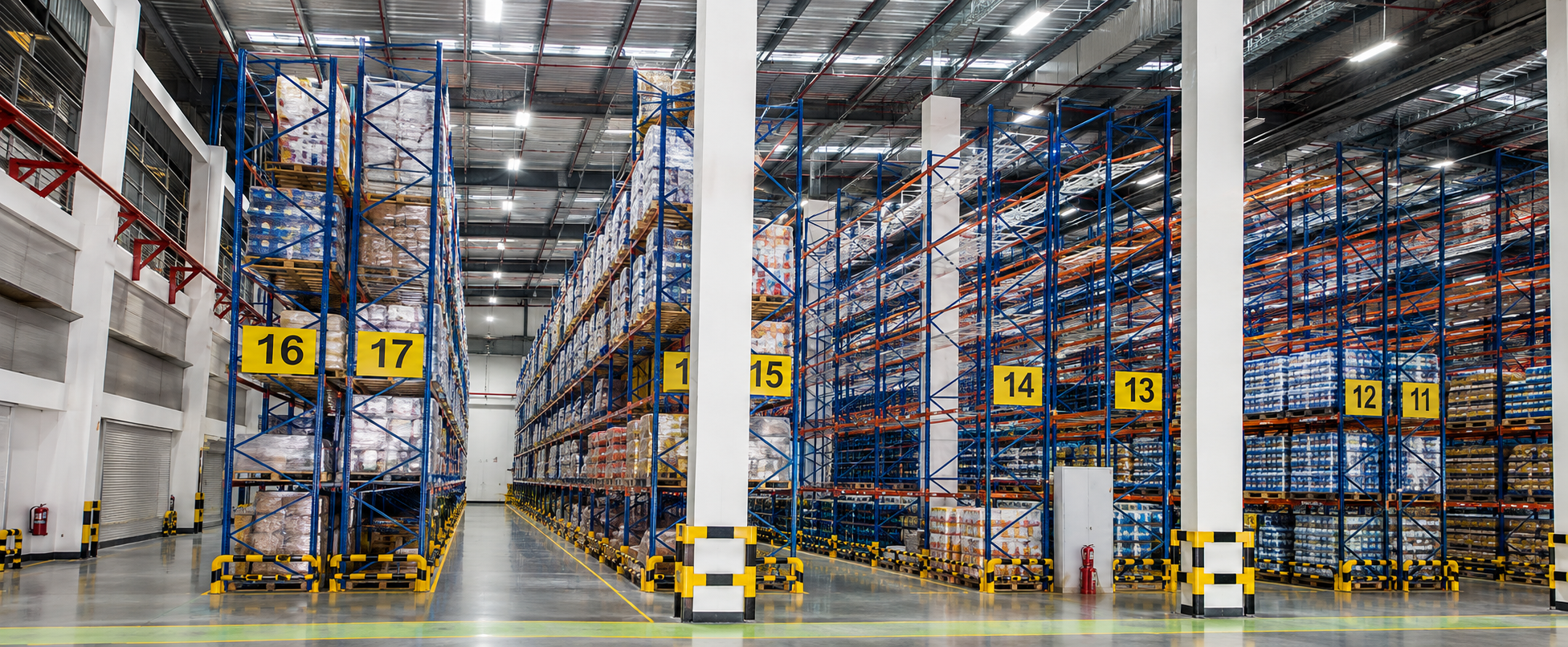
Warehouses are used for storage, distribution, e-commerce fulfilment, import-export operations, retail inventory and logistics. Key specifications include floor loading, ceiling height, loading bays, dock levellers, truck court depth, fire protection, ventilation, security, office area and distance to expressways or ports.
Ready-Built Factories
Ready-built factories are suitable for manufacturers that want to begin operations faster than building from scratch. They may be located inside industrial estates, industrial parks or private factory zones. Tenants should check permitted activities, machinery load, factory licence requirements, wastewater systems, power capacity and expansion options.
Logistics and Distribution Centres
Logistics centres are designed for fast movement of goods. They often require wider roads, large truck courts, multiple loading doors, higher ceilings, racking systems, security systems, warehouse management technology and easy access to highways, airports or ports.
Cold Storage and Temperature-Controlled Space
Cold storage facilities are needed for food, pharmaceuticals, chemicals, fresh produce and temperature-sensitive goods. Tenants should verify temperature range, backup power, insulation, loading area design, humidity control, hygiene standards, pest control and regulatory approvals.
Industrial Land and Built-to-Suit Space
Some businesses need land for a custom factory, open storage, yard space or specialised operations. Built-to-suit leasing can work for companies with specific requirements, but the lease term, construction responsibility, ownership of improvements, handover condition and exit rights must be clearly written.
Legal and Permit Checks Before Renting
Before renting a factory or warehouse in Thailand, tenants should confirm whether the building can legally support the intended activity. A property that works for storage may not automatically be suitable for manufacturing, food production, chemical handling, recycling, automotive work or heavy machinery.
Factory Licence and Factory Classification
The Board of Investment’s One Start One Stop Investment Center explains that a factory can include premises using machinery equivalent to five horsepower or more, or employing seven or more workers, for activities such as manufacturing, producing, assembling, packing, repairing, maintaining, testing, improving, processing, conveying, storing or destroying goods. Tenants should not rely only on old or simplified factory category descriptions. Confirm the latest factory classification and licence requirements with the Ministry of Industry, IEAT or a qualified legal adviser before operating.
Industrial Estate vs Non-Industrial Estate
Industrial estates can make permitting and infrastructure easier for some operators. The Industrial Estate Authority of Thailand states that its One Stop Service Center provides support for buying or renting land, recommending suitable factory locations and approving required permits and certificates. For manufacturing or regulated activities, renting inside an industrial estate may reduce zoning uncertainty and provide better utilities, waste systems and business support.
Lease Registration
For long-term industrial leases, registration matters. Under Thailand’s lease framework, leases of immovable property for more than three years generally must be made in writing and registered with the competent official to be enforceable beyond three years. Ordinary leases of immovable property are generally limited to 30 years. Tenants entering long warehouse, factory, land or built-to-suit leases should obtain independent legal advice before paying a deposit.
Environmental, Safety and Operational Approvals
Industrial tenants may need approvals related to pollution control, wastewater, emissions, fire safety, hazardous materials, food and drug production, customs, bonded warehouse status or free zone operations. These requirements depend on the business activity, not only the building type. Always check before signing because some properties cannot legally support certain activities.
Best Locations for Renting Industrial Property in Thailand
Bangkok Outskirts: Last-Mile Distribution and City Access
Bangkok itself has limited space for large industrial operations, but the outskirts remain important for last-mile delivery, e-commerce, retail distribution, small warehouses and service workshops. Areas to compare include Lat Krabang, Bang Na-Trat, Bang Kapi, Min Buri, Rom Klao, Bang Bon, Bang Khae and locations close to expressways.
Bangkok-area warehouses are useful when customer access and fast delivery matter more than low rent. However, tenants should carefully check truck restrictions, traffic, parking, loading access and whether the building can legally support the intended use.
Samut Prakan: Logistics, Airport Access and Bang Na-Trat
Samut Prakan is one of Thailand’s most important industrial and logistics provinces because it connects Bangkok, Suvarnabhumi Airport, Bang Na-Trat Road, eastern seaboard routes and major distribution corridors. It suits warehouses, fulfilment centres, light manufacturing, cold storage, import-export operations and businesses that need fast access to Bangkok and the airport.
Popular areas include Bang Phli, Bang Sao Thong, Bang Bo, Thepharak, Bang Pu and locations along Bang Na-Trat Road. Rents may be higher in the most accessible logistics zones, but the transport savings can justify the cost for some operators.
Pathum Thani and Ayutthaya: North Bangkok Manufacturing and Distribution
Pathum Thani and Ayutthaya are practical choices for factories and warehouses serving northern Bangkok, central Thailand and nationwide distribution routes. Important areas include Lam Luk Ka, Khlong Luang, Rangsit, Nava Nakorn, Wang Noi and Bang Pa-in.
This region is useful for companies that need larger sites, labour access, industrial parks, lower congestion than inner Bangkok and road connections toward the north and northeast of Thailand.
Chonburi, Rayong and Chachoengsao: Eastern Economic Corridor
The Eastern Economic Corridor covers Chachoengsao, Chonburi and Rayong and is one of Thailand’s most important industrial regions. The EEC promotes targeted industries and includes special economic promotion zones where eligible investors may receive tax incentives, other privileges and business facilitation services.
Chonburi and Rayong are especially important for automotive, electronics, petrochemicals, logistics, export manufacturing and port-related operations. Locations near Laem Chabang Port, Map Ta Phut, Amata City, Eastern Seaboard industrial areas and other EEC zones are often strong choices for manufacturers and exporters.
Laem Chabang and Map Ta Phut: Port-Linked Industrial Operations
Laem Chabang is important for containerised logistics, export manufacturing and distribution. Map Ta Phut is especially relevant for petrochemical, energy, heavy industrial and port-linked activities. Businesses that rely on port access should compare trucking time, customs process, container yard access, free zone options and port-related service providers.
Other Regional Industrial Hubs
Thailand also has important industrial and logistics locations outside Greater Bangkok and the EEC, including Nakhon Ratchasima, Khon Kaen, Saraburi, Prachinburi, Songkhla and border-related logistics areas. These may suit businesses serving regional customers, cross-border trade, agriculture, food processing, mining-related supply chains or lower-cost operations.
Industrial Estate, Industrial Park or Standalone Warehouse?
| Option | Best For | Key Considerations |
|---|---|---|
| Industrial Estate | Manufacturing, export businesses, regulated operations and companies needing reliable infrastructure | Estate rules, permits, utilities, common fees, expansion land, environmental controls and IEAT or estate approval process |
| Industrial Park | Factories, warehouses and mixed industrial users seeking managed zones outside formal IEAT estates | Zoning, road access, landlord support, utilities, waste systems, permits and service charges |
| Standalone Warehouse | Storage, e-commerce, distribution, showrooms, service operations and flexible logistics use | Legal permitted use, truck access, parking, fire safety, floor loading, neighbours and lease terms |
| Built-to-Suit Facility | Large operators with specific layout, production, cold storage or logistics requirements | Long lease commitment, construction specs, ownership of improvements, handover condition and exit rights |
Industrial Property Viewing Checklist
Before signing a lease, inspect the building with your operations, engineering, legal and finance teams where possible. A warehouse or factory viewing should include more than a walk-through.
- Permitted use: Confirm that your business activity is allowed at the property.
- Factory licence: Check whether your operation needs a licence, notification or estate approval.
- Power supply: Verify transformer size, phase, backup power and upgrade possibility.
- Floor loading: Confirm the floor can support machinery, racking, forklifts and stored goods.
- Ceiling height: Check clear height, beam height and suitability for racking or production lines.
- Loading access: Inspect loading bays, dock levellers, truck court, turning radius and container access.
- Road access: Test routes for six-wheel, ten-wheel and container trucks if relevant.
- Fire safety: Check sprinklers, hydrants, alarms, exits, fire pumps and insurance requirements.
- Water and wastewater: Confirm supply, drainage, treatment capacity and discharge rules.
- Ventilation: Review heat, fumes, dust, odours and air circulation.
- Office and staff areas: Check toilets, canteen, locker rooms, meeting rooms and parking.
- Security: Review fencing, CCTV, guards, access control and lighting.
- Expansion: Ask whether adjacent space, yard space or extra power can be added later.
Lease Terms to Review Carefully
Industrial leases are usually more complex than residential leases because the tenant may install equipment, modify the building, obtain permits, store valuable goods or operate heavy machinery. Important clauses include:
- Lease term and renewal: Check the initial term, renewal rights, notice period and registration requirements.
- Permitted use: Make sure the lease clearly allows your actual business activity.
- Fit-out and alterations: Confirm what can be installed, who approves it and what must be removed at the end.
- Utilities: Clarify electricity, water, wastewater, gas, internet and capacity upgrade costs.
- Maintenance: Separate landlord responsibilities from tenant responsibilities.
- Insurance: Confirm building insurance, public liability, inventory insurance and fire coverage.
- Environmental liability: Define responsibility for spills, waste, contamination, disposal and compliance.
- Sublease and assignment: Check whether the tenant can transfer or sublease the space.
- Termination: Review default events, cure periods, early termination, relocation rights and penalties.
- Handover condition: Record building condition, meter readings, defects, equipment and agreed repairs.
Common Mistakes When Renting Industrial Space
- Choosing a warehouse based only on rent per square metre.
- Signing before confirming factory licence or permitted use.
- Ignoring truck access, turning radius and loading time.
- Underestimating power requirements for machinery, cold storage or automation.
- Failing to check flood risk, drainage and insurance exclusions.
- Assuming all industrial estates offer the same utilities, approvals and rules.
- Not registering a long lease where registration is needed.
- Forgetting reinstatement costs when the lease ends.
- Ignoring labour access, staff transport and worker facilities.
- Failing to budget for racking, fit-out, fire systems, permits and moving costs.
How to Choose the Right Industrial Location
The best industrial location depends on your supply chain. A manufacturer may prioritise utilities, labour and zoning. A logistics company may prioritise truck routes and delivery time. A cold storage tenant may prioritise power reliability and loading efficiency. An exporter may prioritise ports, customs and free zone access.
- For Bangkok delivery: Compare Bangkok outskirts, Samut Prakan, Bang Na-Trat, Lat Krabang and Wang Noi.
- For airport access: Consider Lat Krabang, Bang Phli, Bang Sao Thong and Hua Mak-Srinakarin corridors.
- For port access: Compare Laem Chabang, Chonburi, Rayong and Map Ta Phut-related locations.
- For EEC investment: Review Chachoengsao, Chonburi and Rayong, including EEC promoted zones.
- For lower-cost space: Compare farther locations with transport cost, labour access and customer delivery time.
Final Recommendation
Renting industrial property in Thailand can be efficient, but only if the building, lease and location match your operation. Do not rely only on listing photos, floor area or headline rent. The real cost of a poor industrial lease can include delayed permits, utility upgrades, truck access problems, production downtime and expensive reinstatement work.
For most tenants, the safest process is to define technical requirements first, shortlist only legally suitable properties, inspect with an operations checklist, confirm permits and utilities, then negotiate lease terms with legal review before paying a major deposit.
Looking for an Industrial Property for Rent in Thailand?
Tell Hero Realtor your required location, property type, floor area, ceiling height, power demand, truck access, loading requirements, business activity, lease term and target move-in date. Our team can help you shortlist suitable warehouses, factories, logistics facilities and industrial land for rent in Thailand.
Browse warehouses and industrial properties for rent or contact Hero Realtor for personalised industrial property assistance.