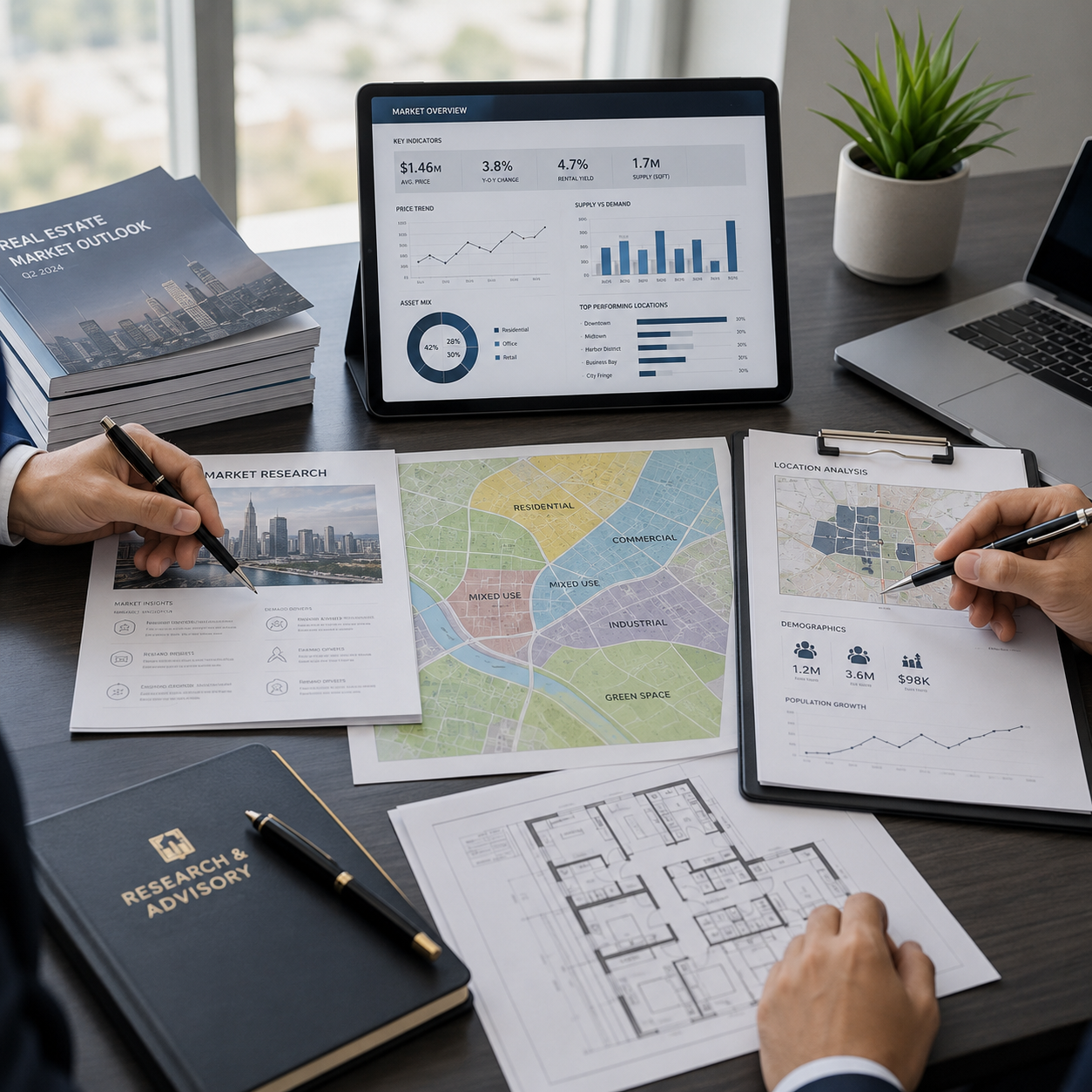






If you are planning to sell, rent out, refinance, or review your Bangkok property, a property valuation is one of the first steps. A realistic valuation helps you understand what your condo, house, villa, townhouse, or land may be worth in the current market before you make a decision.
Hero Realtor provides free property valuation guidance for Bangkok owners who want a practical market estimate before listing their property. This is different from a formal certified valuation report used for court, banking, accounting, or public regulatory purposes. For formal valuation purposes, owners should use a qualified professional valuer or valuation company where required.
This guide explains how Bangkok property values are estimated, what factors affect your property price, why a valuation may differ from your expected selling price, and how to prepare your property before requesting a valuation.
What Is a Free Property Valuation?
A free property valuation is an estimated market value based on available market evidence, property condition, location, comparable listings, recent transactions where available, and current buyer or tenant demand.
For most sellers, this type of valuation helps answer one practical question: “What is a realistic asking price for my property today?”
A free market estimate can be useful for:
- Preparing to sell a Bangkok condo, house, villa, townhouse, or land plot
- Checking whether your current asking price is realistic
- Understanding expected buyer demand
- Estimating rental potential
- Reviewing whether to sell, rent, renovate, or hold the property
- Comparing your property with similar homes in the same area
Free Market Estimate vs Formal Property Valuation
It is important to understand the difference between a free market estimate and a formal valuation report.
A free market estimate is usually suitable when you need:
- A suggested selling price
- A rental price recommendation
- Market feedback before listing
- Advice on how your property compares with similar listings
- A starting point for sale strategy
A formal valuation report may be needed for:
- Mortgage or bank lending
- Accounting or audit purposes
- Corporate reporting
- Legal disputes or court proceedings
- Insurance or asset reporting
- Public regulatory purposes
The Securities and Exchange Commission of Thailand explains that valuation companies used for capital market transactions must follow professional standards, ethics, and additional requirements for public-purpose valuation reports. The Valuers Association of Thailand also publishes professional valuation standards for valuers in Thailand.
How Bangkok Property Values Are Estimated
There is no single formula that applies to every property. A Bangkok property valuation usually combines several indicators, including market comparison, property condition, land or building value, buyer demand, and location quality.
1. Location
Location is one of the most important valuation factors. Properties close to BTS, MRT, expressways, international schools, hospitals, shopping centers, parks, office districts, and major lifestyle areas usually attract stronger buyer and tenant interest.
In Bangkok, popular residential areas such as Sukhumvit, Silom, Sathorn, Phrom Phong, Thong Lor, Ekkamai, Ari, Rama 9, Bang Na, Riverside, and Ladprao can have very different price levels. Even within the same district, values may differ depending on soi access, traffic, walkability, building quality, nearby facilities, and distance to public transport.
2. Property Type
Condos, detached houses, villas, townhouses, shophouses, and land plots are valued differently. Condominiums are often compared by price per square meter, building reputation, floor level, view, unit layout, facilities, and foreign quota where relevant.
Houses and villas require a broader review because land size, usable area, frontage, road width, parking, garden, construction quality, renovation condition, and neighborhood security all affect value.
3. Comparable Market Evidence
A realistic valuation should compare your property with similar properties in the same location. For example, a two-bedroom condo in Asok should be compared with similar two-bedroom units in nearby buildings, not with a larger renovated penthouse or a unit in a different neighborhood.
Useful comparisons may include:
- Similar properties currently listed for sale
- Properties recently sold, where reliable data is available
- Rental prices for similar units or homes
- Building-specific or project-specific price trends
- Time on market for comparable listings
4. Official Appraisal Price
Thailand’s Treasury Department publishes official appraisal prices that are used as references for government fee and tax calculations. Thailand’s government portal explains that these appraisal values are reference prices for transactions and land and building tax calculations, but they may not always match the real market selling price.
For sellers, the official appraisal price can be useful for estimating transfer-related costs, but the market value of a Bangkok property may be higher or lower depending on demand, condition, view, layout, building reputation, and buyer competition.
5. Building Age and Condition
Newer properties often attract stronger demand, but older properties can still achieve good prices if they are well maintained, renovated, spacious, or located in a strong neighborhood.
For condominiums, buyers usually check the building lobby, elevators, parking, common areas, swimming pool, gym, security, juristic management, maintenance fees, sinking fund, and overall project condition.
For houses, buyers usually check structure, roof, drainage, air-conditioning, electrical systems, plumbing, kitchen, bathrooms, garden, boundary walls, termite history, flooding risk, and road access.
6. Layout, View, Floor Level, and Usable Space
Two properties with the same size can have different values if one has a better layout, more natural light, a better view, a larger balcony, higher ceiling, better kitchen, or more efficient usable space.
For Bangkok condos, corner units, river views, skyline views, park views, high floors, and units with minimal wasted space often perform better than units with poor light, blocked views, or awkward layouts.
7. Supply, Demand, and Liquidity
Market liquidity affects how quickly a property can sell and at what price. If many similar units are listed in the same building, buyers have more negotiating power. If there are few similar properties available in a desirable project or location, the owner may have stronger pricing power.
The Bank of Thailand publishes property price indexes that track residential price trends, including condominium, townhouse, detached house, and land price indicators. These indexes can help owners understand broad market direction, although individual property values still depend on building-level and unit-level factors.
Why Your Valuation May Not Match Your Expected Price
Owners often have an emotional attachment to their property, especially if they renovated it, lived there for many years, or bought during a stronger market. However, buyers compare your property with other choices available today.
A valuation may be lower than expected if:
- Similar properties are listed at lower prices
- The building has many competing units for sale
- The property needs renovation or maintenance
- The layout is less efficient than newer projects
- The property is far from BTS, MRT, schools, or daily amenities
- There are restrictions on foreign ownership quota in the building
- Transfer costs, taxes, or repair costs reduce buyer interest
- The asking price is based on the owner’s purchase price rather than current market demand
A valuation may be higher than expected if:
- The property is rare in that location
- The unit has a strong view, layout, or floor position
- The house has unusually good land size or frontage
- The building is well managed and in high demand
- The property is renovated to a standard buyers value
- There is limited competing supply
Transfer Fees and Taxes Sellers Should Consider
A property valuation should not only focus on the selling price. Sellers should also estimate transfer costs and taxes before agreeing to a final price.
The Revenue Department states that sellers of immovable property may be responsible for personal or corporate income tax, specific business tax where applicable, and stamp duty where applicable, with payments made at the time of registration at the Land Office. The Revenue Department also explains that specific business tax is calculated at 3%, with an additional local tax of 10% of the specific business tax amount.
Common transaction costs may include:
- Transfer registration fee
- Specific business tax, if applicable
- Stamp duty, if applicable
- Withholding tax or income tax
- Mortgage discharge fee, if the property has an existing loan
- Agent commission, if you use an agency service
- Legal or document preparation costs, if needed
The exact cost depends on the seller type, holding period, Land Office appraisal value, registered sale price, tax status, and whether the property is owned personally or by a company. Sellers should confirm final calculations with the Land Office, Revenue Department, accountant, or legal adviser before transfer.
How to Improve Your Property Value Before Selling
Not every upgrade increases value, but small improvements can make a property easier to sell and help buyers feel more confident.
Useful improvements may include:
- Repairing leaks, broken tiles, damaged flooring, or wall cracks
- Servicing air-conditioning units
- Repainting walls in neutral colors
- Deep cleaning bathrooms, kitchen, windows, and balconies
- Improving lighting and replacing old bulbs
- Removing clutter before photos and viewings
- Fixing cabinet doors, locks, handles, and appliances
- Improving garden, pool, or outdoor areas for houses and villas
- Preparing building documents, title deed copy, floor plan, and expense information
Major renovations should be considered carefully. A full renovation may not always recover its cost unless it solves a major problem or matches buyer expectations in that market segment.
Documents That Help With a Bangkok Property Valuation
Owners can receive a more accurate valuation if they prepare key property information before requesting an estimate.
Helpful documents and details include:
- Property address and project name
- Title deed copy or unit information
- Land size, usable area, and floor plan
- Number of bedrooms, bathrooms, parking spaces, and floors
- Photos or video of the property
- Renovation history and maintenance records
- Current tenancy details, if rented
- Common fee, sinking fund, and juristic office information
- Expected selling price or rental price, if you already have one
- Preferred selling timeline
When Should You Request a Property Valuation?
You should request a valuation before listing your property, not after it has already been sitting on the market for months. Starting with an unrealistic price can reduce buyer interest and make the property appear stale.
A valuation is especially useful when:
- You are planning to sell within the next 3 to 12 months
- You want to compare selling versus renting
- You inherited a property and need a market view
- You are reviewing your investment portfolio
- You want to refinance or discuss financing with a bank
- You are unsure whether renovation is worth the cost
- You want to understand how your property compares with current market supply
Common Mistakes Owners Should Avoid
- Pricing based only on what you paid for the property
- Ignoring similar listings in the same building or neighborhood
- Assuming the official appraisal price equals market value
- Forgetting transfer taxes and selling costs
- Over-renovating before understanding buyer demand
- Using old market data from a stronger property cycle
- Listing too high and then reducing the price too late
- Not preparing documents, photos, and property details before valuation
Get a Free Property Valuation in Bangkok
If you own a condo, house, villa, townhouse, land plot, or investment property in Bangkok, Hero Realtor can help you estimate its current market value and prepare a practical sale or rental strategy.
Our team reviews property type, location, condition, comparable listings, rental potential, buyer demand, and selling timeline to provide a realistic market estimate. If your situation requires a formal certified valuation report, we can also advise when a professional valuer may be more appropriate.
Contact Hero Realtor to request a free Bangkok property valuation and discuss your selling or rental plans.