





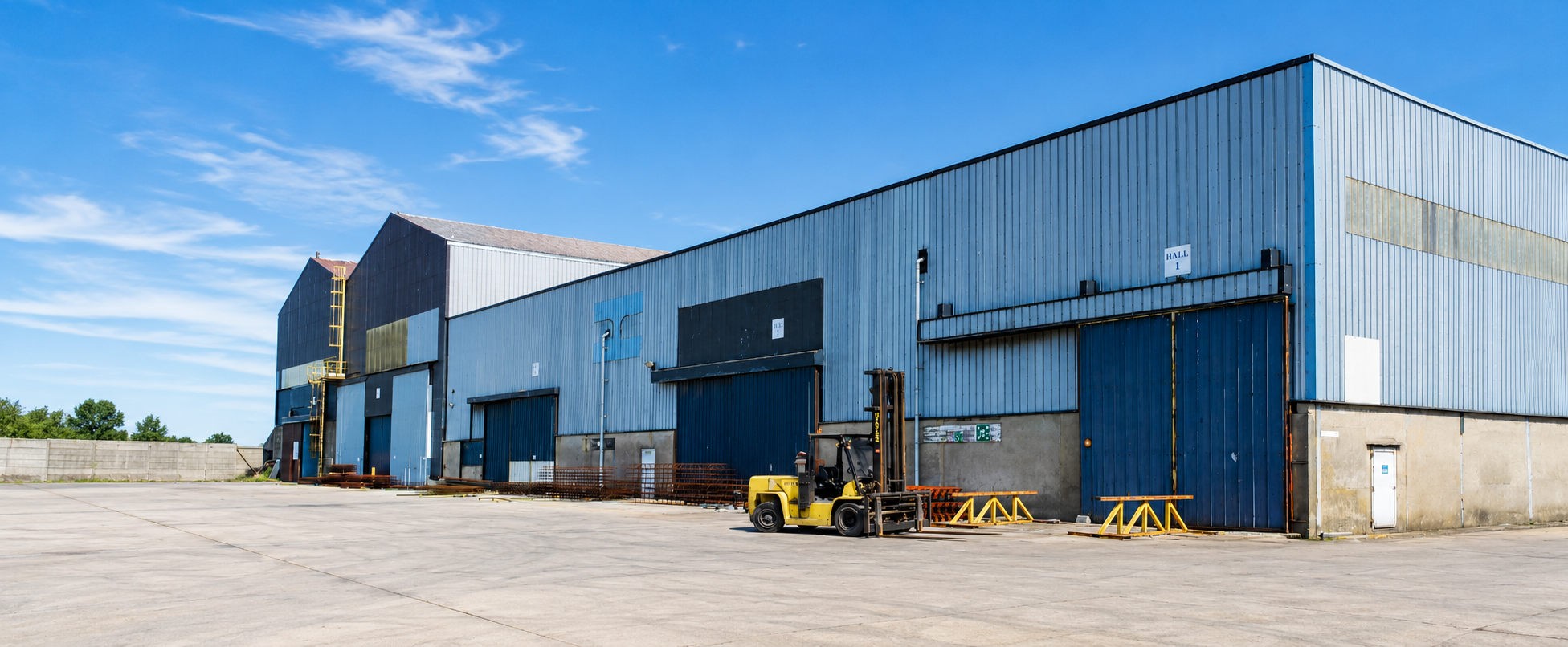
Businesses planning to manufacture, assemble, process, pack, repair, or operate machinery in Thailand should understand factory-license requirements before leasing or buying industrial property. A low-rent warehouse or factory can become expensive if the activity cannot be licensed, the building does not meet safety requirements, or utilities are not suitable for production.
Thailand’s factory licensing framework is mainly supervised by the Department of Industrial Works, or DIW, under the Ministry of Industry. The official DIW website provides factory licensing services, e-License access, factory application tracking, industrial waste systems, pollution reporting, safety self-assessment, and hazardous-substance systems.
This updated guide explains what businesses should know about factory licensing in Thailand, how the DIW process works, what documents may be needed, and what to check before choosing a factory, warehouse, or industrial building.
What Is a Factory License in Thailand?
A factory license is official permission to operate a qualifying industrial activity in Thailand. Many operators refer to the factory operating license as a “Ror Ngor 4” license, but the exact requirement depends on the factory category, activity type, machinery, location, building use, environmental impact, and applicable regulations.
The Board of Investment explains that Thailand’s Factory Act regulates factory establishment, operation, expansion, safety requirements, and industrial pollution controls. DIW’s official law section lists the Factory Act B.E. 2535 and later Factory Act amendments, including the 2019 amendments, as key legal references for factory operations.
Who May Need a Factory License?
A factory license, notification, or related approval may be relevant for businesses involved in:
- Manufacturing, assembling, processing, or packing products
- Food production, repacking, cold storage, or clean facilities
- Cosmetics, supplements, medical devices, pharmaceuticals, or regulated health products
- Electronics, automotive parts, plastics, metalwork, furniture, textiles, or machinery
- Printing, repair workshops, recycling, waste handling, or industrial services
- Chemical storage, hazardous substances, wastewater, dust, fumes, odor, or noise-generating operations
- Factory expansion, machinery installation, or changes to production processes
A storage-only warehouse may not always need the same approval as a production factory. However, if the business uses machinery, repacks products, handles regulated goods, stores chemicals, or creates industrial waste, additional approvals may apply.
Factory License vs Other Business Approvals
A factory license is not the same as company registration, VAT registration, BOI promotion, Thai FDA approval or GMP compliance, import/export registration, or a building permit. Many businesses need several approvals before operating.
| Approval | Main Purpose | Commonly Relevant For |
|---|---|---|
| Factory license or factory notification | Allows qualifying industrial activity, factory operation, or factory expansion. | Manufacturers, processors, assembly plants, industrial operators. |
| Thai FDA approval or GMP compliance | Controls regulated health products and production standards. | Food, drugs, cosmetics, medical devices, supplements. |
| Building or construction permit | Confirms approved building use, construction, or modification. | New factories, extensions, structural work, fit-outs. |
| Hazardous substance approval | Controls storage, import, production, possession, or use of regulated substances. | Chemical, coating, cleaning, manufacturing, and industrial businesses. |
| BOI promotion | Provides investment incentives for qualifying promoted activities. | Foreign investors and eligible industries. |
Updated DIW Digital Process: e-License and Online Systems
Factory operators should expect more digital interaction with DIW and the Ministry of Industry. DIW provides links to factory-license applications, e-License, application tracking, industrial waste systems, pollution reporting, safety self-assessment, and hazardous-substance services.
DIW also explains that users of DIW permission systems must register through the Ministry of Industry customer-registration system and complete DIW User Authentication before using DIW permission systems. This means businesses should prepare digital access, authorized-person information, and supporting documents early.
Step-by-Step: How to Prepare for a Factory License in Thailand
Step 1: Define the Business Activity
Start by describing the exact activity. Officials may consider product type, machinery, production process, raw materials, chemicals, workers, waste, emissions, noise, odor, wastewater, and nearby communities.
- What products will be manufactured, assembled, processed, or packed?
- What machinery will be used?
- Will the process create wastewater, dust, fumes, odor, noise, or waste?
- Will the business handle food, cosmetics, medical devices, chemicals, or hazardous substances?
- Will production require Thai FDA, GMP, environmental, or hazardous-substance approval?
Step 2: Confirm the Factory Category
Check whether your activity requires no license, notification, or a factory license before operation. DIW’s official procedure page includes the procedure for applying for a Category 3 factory license and related factory-permission steps.
Step 3: Choose a Suitable Factory Location
The location must legally and technically support the planned activity. A building advertised as a “factory” or “warehouse” may still be unsuitable if the activity, machinery, waste, or utilities do not match the property.
Common industrial areas near Bangkok include Samut Prakan, Bang Na, Bang Phli, Bang Bo, Pathum Thani, Chachoengsao, Chonburi, Rayong, and Ayutthaya. Industrial estates may be suitable for businesses that need stronger infrastructure, planned industrial zoning, roads, utilities, and waste-management systems.
Step 4: Inspect the Building and Utilities
Before signing a lease or purchase agreement, inspect the site with an engineer or qualified technical adviser.
- Power capacity, transformer, meter size, and three-phase electricity
- Water supply, drainage, wastewater, and flood risk
- Floor loading, ceiling height, ventilation, roof condition, and heat control
- Truck access, container access, loading dock, and turning space
- Fire exits, alarms, hydrants, sprinklers, extinguishers, and emergency lighting
- Office, worker facilities, toilets, canteen, parking, and safety routes
- Neighbor impact, road width, community complaints, odor, noise, and traffic
Step 5: Prepare Documents
Required documents depend on the activity and location, but factory applications often involve company documents, land or lease documents, layout drawings, machinery lists, process descriptions, and safety or environmental information. DIW provides official forms and document checklists for factory-license and expansion applications.
- Company registration documents
- Authorized director or applicant information
- Land title, lease agreement, or owner consent
- Factory layout and building drawings
- Machinery list and capacity details
- Production process description
- Raw material and product details
- Utility, labor, wastewater, waste, dust, odor, noise, and emission information
- Fire safety and occupational safety details
- Environmental or risk documents if required
Step 6: Submit Through the Correct DIW or Ministry System
Depending on the activity, application route, and location, the application may be submitted through DIW, the Ministry of Industry e-License system, or related official online systems. Keep all reference numbers, submitted documents, receipts, and official correspondence.
Step 7: Site Review and Approval
Officials may review documents, inspect the site, request additional information, and assess safety, environmental impact, pollution controls, hazardous substances, waste handling, and building suitability. Do not begin production before receiving the required permission.
Common Reasons Factory License Applications Are Delayed
- The building cannot legally support the intended factory activity
- The lease was signed before checking license feasibility
- Power, drainage, ventilation, or fire-safety systems are insufficient
- Machinery list or production-process description is incomplete
- Wastewater, odor, dust, noise, or waste controls are unclear
- Thai FDA, GMP, hazardous-substance, building, or environmental approvals are missing
- The operator changes machinery or processes after submission
- The landlord does not provide owner consent or building documents
Property Checklist Before Leasing or Buying a Factory
Legal Checklist
- Confirm the factory category and licensing requirement.
- Check whether the land and building can support the intended activity.
- Ask whether the previous operator had a factory license.
- Check whether the factory license can be transferred or must be newly applied for.
- Confirm whether Thai FDA, GMP, hazardous-substance, environmental, or building approvals are needed.
- Add a permit-condition clause to the lease if approval is not yet confirmed.
Technical Checklist
- Check power capacity, transformer, and three-phase electricity.
- Review drainage, wastewater, flood risk, and water supply.
- Inspect roof, floor loading, ventilation, ceiling height, and heat control.
- Check truck access, loading dock, container turning, and road width.
- Review fire systems, emergency exits, alarms, and safety routes.
- Confirm worker facilities, office space, parking, and security.
Lease Checklist
- Confirm lease term, renewal rights, rent escalation, and deposit.
- Clarify who pays for utility upgrades, transformer installation, and permit costs.
- Confirm rights to install machinery, racking, cold rooms, exhaust, drainage, or partitions.
- Check restoration obligations at the end of the lease.
- Clarify responsibility for roof, structure, drainage, electrical, and fire-system repairs.
- Negotiate fit-out or licensing time before rent fully starts where possible.
Factory License for Foreign Investors
Foreign investors should plan factory licensing together with company structure, land or lease rights, BOI promotion, foreign business restrictions, work permits, tax, and product-specific approvals. BOI promotion may provide incentives for qualifying projects, but it does not automatically replace factory licensing or product-specific approvals.
Ongoing Compliance After Approval
Factory licensing is not only a pre-opening step. Operators must continue to comply with license conditions, safety rules, industrial waste requirements, pollution reporting, hazardous-substance controls, worker safety obligations, and product-specific rules such as Thai FDA or GMP requirements where applicable.
DIW provides official systems for industrial waste, pollution reporting, safety self-assessment, hazardous-substance information, and factory data. Businesses should appoint a responsible person to monitor reporting deadlines, permit changes, waste manifests, inspections, and ongoing compliance.
Final Thoughts
The most important factory-license decision often happens before the application: choosing the right property. A factory or warehouse should be checked for legal use, utilities, fire safety, wastewater, truck access, machinery layout, environmental controls, and landlord cooperation before a lease is signed.
For businesses entering Thailand, proper planning can reduce licensing delays, avoid expensive relocation, and help operations start smoothly. Before leasing or buying industrial property, confirm the factory category, review DIW requirements, inspect the building with technical experts, and include permit protection in the lease.